What MCP Is and Where It Fits in AI Integrations
A practical explanation of the Model Context Protocol, what problem it solves, and where it fits in real AI systems.


Key Takeaways
MCP creates a standard way for models to access tools and external context without custom integrations for each pairing.
The protocol reduces integration overhead, but it does not replace product or workflow design decisions.
MCP is most useful when tool interoperability matters more than bespoke agent behavior.
Have you ever tried connecting different tech systems only to end up with a tangled mess of custom code and frustrating workarounds? That’s exactly the problem the Model Context Protocol (MCP) is solving for AI integration, and it’s absolutely transforming how we build intelligent applications!
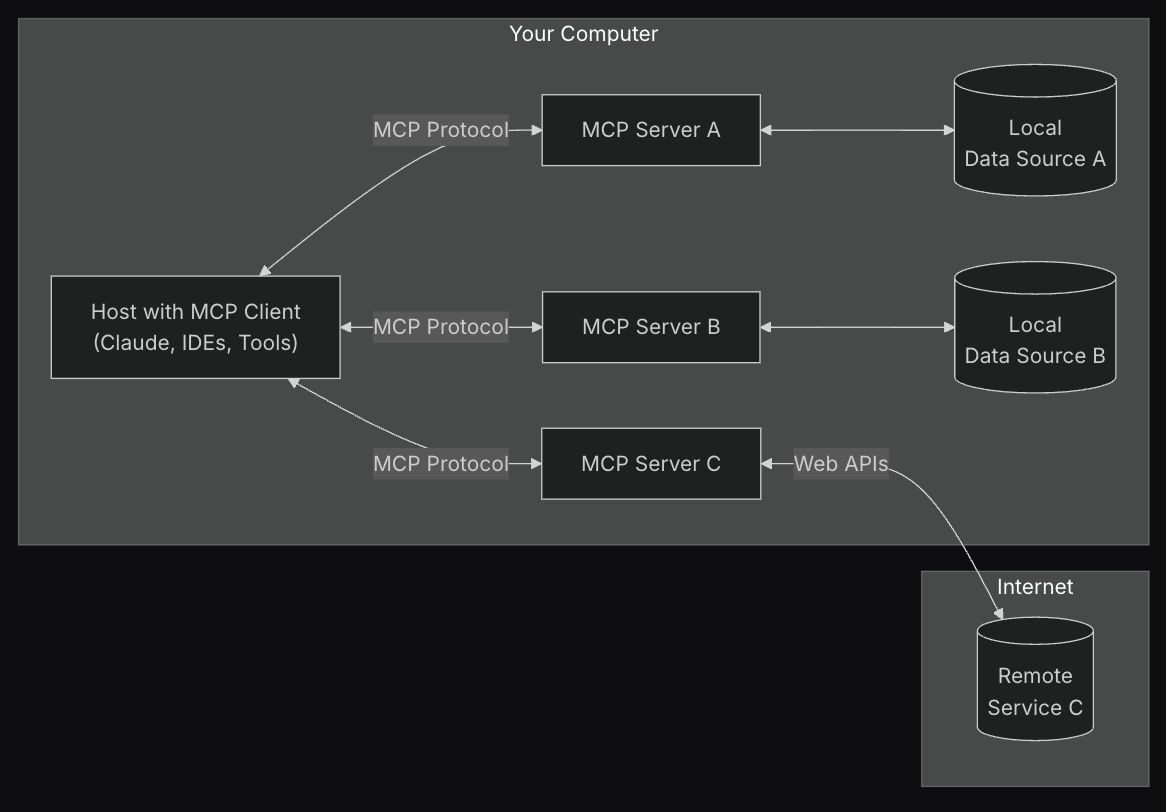
I’ve spent years working with various AI systems, and I can tell you firsthand: getting AI models to smoothly access external data sources has traditionally been a developer’s nightmare. But MCP is changing all that, working like a universal adapter for AI - think of it as the USB-C port for large language models!
What Makes MCP Such a Big Deal?
My first read on MCP was that it was another wire-format spec that would die in committee. I changed my mind the first time I wired one up on a client project and watched it replace a chunk of the glue code we had written to feed Claude the right context from a Postgres schema. That is the part that matters: it deletes code you already wrote and did not want to maintain.
The Integration Superpower
Before MCP, connecting an AI to just five different data sources meant building five separate custom integrations - each with its own documentation, authentication methods, and maintenance headaches. MCP replaces this complexity with a single, standardized protocol that works across systems.
Real-Time Magic
One of my favorite things about MCP is how it enables persistent, two-way communication. This means AI assistants can check your calendar in real-time or send emails on your behalf without awkward delays or manual refreshing.
Security Without the Stress
As someone who’s spent countless hours wrestling with security implementations across different APIs, MCP’s built-in security practices are a breath of fresh air. The protocol mandates explicit user consent and follows data privacy best practices by design.
MCP vs API
| Feature | MCP | Traditional API |
|---|---|---|
| Integration Effort | Single, standardized | Separate per API |
| Real-Time Communication | Yes | No |
| Dynamic Discovery | Yes | No |
| Scalability | Easy (plug-and-play) | Requires additional integrations |
| Security & Control | Consistent across tools | Varies by API |
The Industry Giants Are All In
What really convinces me that MCP is here to stay is the massive industry adoption we’re seeing. OpenAI has integrated MCP support into its Agents SDK, with plans for ChatGPT’s desktop app. Microsoft has launched a Playwright-MCP server for web browsing. Recently, Google announced that it is also jumping this bandwagon. Even companies like Block and Apollo are jumping on board.
When this many major players commit to a protocol this quickly, you know something special is happening!
What This Means For Your AI Projects
If you’re building anything with AI right now, MCP should be on your radar. Here’s why:
- Development Speed: Build once, integrate many times - MCP dramatically cuts your integration workload
- Future-Proofing: As an open standard gaining wide adoption, MCP implementations will likely have long-term support
- Functionality Boost: Your AI applications gain access to richer, real-time data without custom coding
I remember the early days of struggling to get a chatbot to check customer information in a CRM system - what took weeks of custom development could now be accomplished in hours with MCP.
Getting Started with MCP
Ready to dive in? The best resources are the official website at modelcontextprotocol.io and the GitHub repository at github.com/modelcontextprotocol.
If you’re like me and learn best by doing, try connecting a simple AI application to an MCP server. Even a basic implementation will show you just how powerful this protocol can be!
The Future Is Connected
The real value of MCP is not the protocol spec itself. It is that a model can now reach into your systems without a team first writing a bespoke integration for every pairing. Fewer custom adapters means more of the work you actually wanted to do in the first place.
As AI development continues to accelerate, those who embrace open standards like MCP will have a significant advantage. I’m personally excited to see what the community builds with this protocol in the coming months!
What AI integration challenges are you facing in your projects? I’d love to hear how you think MCP might help solve them!
How We Apply This in Client Work
When a team is deciding whether a new AI capability should stay a prototype or become a real product, the next step is usually AI Product Development. The strongest supporting proof page here is the AI SaaS Platform case study, where the product needed stable APIs, orchestration, billing, and tenant isolation around the AI layer.
🔧 Need help implementing MCP or building AI workflows?
We’ve helped businesses integrate real-time AI tools using modern standards like MCP.
👉 Talk to us — let’s explore what you’re building.
Key Citations
- Model Context Protocol GitHub repository with specification and contributions
- Anthropic news article introducing Model Context Protocol and its aims
- Detailed comparison of MCP versus traditional APIs for AI integrations
- VentureBeat article on recent MCP updates and industry adoption
- Official introduction to Model Context Protocol with architecture overview
- Spring AI reference for MCP Java SDK and technical implementation
- Medium post on getting started with MCP and its benefits
- Spring blog post announcing MCP Java SDK release
- Model Context Protocol specification with security principles
Where this shows up in client work
If this topic maps to your team, start with the service path and then the proof asset that shows how BrownMind applies it in production.
Product Engineering
AI Product Development Company
Turn an AI prototype into a real SaaS product with auth, billing, multi-tenant infrastructure, and deployment.
Explore AI Product DevelopmentProof Asset
AI SaaS Platform Case Study
See the multi-tenant sales coaching product we shipped with RAG, billing, org isolation, and production observability.
Read the SaaS Case StudyWant this translated into a working system?
Book a systems audit and we will tell you where the architecture is overkill, where it is insufficient, and what the practical build path looks like.
30 minutes with Apurva. Not a sales call.
Book a Free Systems Audit